- Join Us
- Login
- EEA ToolKit
- Employment Essentials
- Frequently asked
- Contracts and wages
- Time off work & absence
- Staff management & training
- Workplace disputes
- Dismissals and resignations
- Pregnancy and children
- Avoiding discrimination
- Redundancy and Retirement
- Other responsibilities
- Legal Helpline
- Recruitment
- Good Recruitment
- New starters
- Find a groom
- Good Employment
- Resources
- Downloads Library
- EEA Pension & Payroll
- Safe workplace
- Employers Minds
- Transporting horses
- Riding Establishment Licences
- Member discounts
- Business Hub
- Equestrian businesses
- The business plan
- Business compliance
- My clients
- Livery Contract Creator
- Financial matters
- Business challenges
- Marketing
- The EEA
- Employers Life
- Contact
Join Us
Employment Essentials
Recruitment
Good Employment
Resources
Business Hub
Employers Life
The EEA
Contact
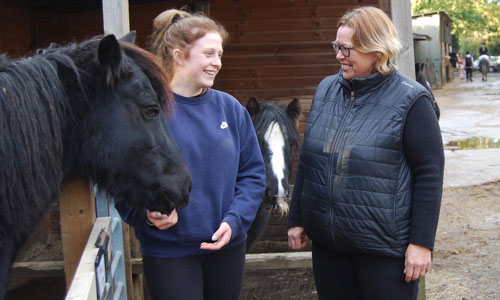
What our members say

“As a livery yard owner, the support from the EEA has been invaluable in the employment of our staff and the efficient running of the business.”
Day Dressage
EEA Member

“We decided we were going to do things differently, I just wasn't always sure how to do it! The EEA has all the solutions to employing staff legally.”
D & L Performance Horses
EEA Member
- Frequently asked
- Contracts and wages
- Time off work & absence
- Staff management & training
- Workplace disputes
- Dismissals and resignations
- Pregnancy and children
- Avoiding discrimination
- Redundancy and Retirement
- Other responsibilities
- Legal Helpline
Tools







- Good Recruitment
- New starters
- Find a groom
Tools
Tools
- Downloads Library
- EEA Pension & Payroll
- Safe workplace
- Employers Minds
- Transporting horses
- Riding Establishment Licences
- Member discounts
Tools
Some functionality of the website is not currently available due to technical difficulties. We're working on fixing the issue.
Employer's Life
Life on an equestrian yard is busy – long hours, early starts, and late nights are part of the job. Because of this, it’s really important that both employers and employees need to be aware of and stay up to date on the legal rules around working time and rest, especially as these can differ depending on the employee in question and time they undertake work. These rules aren’t just “red tape” – they’re there to protect health, safety, and wellbeing. So, what are the key points every equestrian employer should know? Here are five essentials you should keep in mind: Workers should not work more than 48 hours a week on average over 17 weeks, unless they’ve signed a written agreement to “opt out” of this weekly limit. Workers must have 11 consecutive hours’ rest between finishing work and starting work the following day. In the event this is not possible, for example due to the way shifts are arranged, then compensatory rest must be provided to make up for any missed rest during the working day. Workers are entitled to at least 24 hours off in a 7-day period (or 48 hours off every fortnight). If someone works more than six hours in a day, they must have at least a 20-minute uninterrupted break. This should not be taken at the start or end of the day but taken during the working day to ensure it has the desired effect of allowing a break from work. Often, this will be included as a lunch break under an employee’s contractual terms. Stricter protections apply to young workers: maximum 8 hours of work per day, 40 hours per week, a 30-minute break after 4.5 hours, 12 hours rest in any 24 hour working period and 48 hours’ rest each week (unless there is a good business reason why this is not possible and then at least 36 hours must be taken, with the other 12 taken as soon as possible afterwards). Keep clear records of hours and rota patterns to help show compliance with the above under the Working Time Regulations 1998. Not everyone in equestrian life works “office hours.” For staff classed as night workers (typically working between 11pm–6am): Generally, young workers must not work during the following period: There are some exceptions allowing young workers to work some of these hours in limited role however, they must never work between midnight and 4am. You may require someone to be “on call” or “on standby” in case of emergencies, foaling, or caring for sick horses. But does this time count as working time? There is no clear answer however, time spent on call can count towards working time, depending on the circumstances. If the worker must undertake work that they are required to do under their contract of employment and remain on site (e.g. in staff accommodation, ready to respond immediately) This usually counts as working time, even if they are asleep. If the worker is free to go about their personal activities elsewhere but must be reachable by phone This is not working time until they are actually called out. However, once called out, the hours spent actively working are counted as working time. Generally, it is more likely to count as working time if the employer has control over the worker’s activities, place of work and time. If a groom sleeps in staff accommodation and must stay available to regularly check on an in-foal mare overnight, the entire night may count as working time. However, if they are simply on standby at home, and then need to attend an emergency call to come to the yard and spend two hours working, only the hours spent attending to the call count. Looking after horses is demanding work, but looking after people is just as important. Making sure your team has the right balance of hours, rest and support keeps everyone healthier, happier, and more effective. If you’re unsure about how the rules apply to your yard, especially around “on-call” time, please do reach out to the EEA or Wright Hassall teams – we’ll be happy to help.
Working Time, Rest Breaks and On-Call Time
4th December 2025

The Basics: Working Time Rules

Weekly limits

Daily rest

Weekly rest

Breaks during the day

Young workers (reached school leaving age but under 18)

Night Work
“On-Call” Time – A Grey Area Explained
For example...
BLOG ARCHIVE
- 2026 (17 ENTRIES)
- 2025 (16 ENTRIES)
- 2024 (10 ENTRIES)
- 2023 (10 ENTRIES)
- 2022 (6 ENTRIES)
- 2021 (4 ENTRIES)
- 2020 (7 ENTRIES)
- 2019 (14 ENTRIES)
- 2018 (9 ENTRIES)
OUR PARTNERS






-Small.jpg)

The EEA is the membership association for all
equestrian employers in the UK and NI.
MEMBERS OF:


Your item has been added to the basket
You need to create an account, or login before you can add this item to your basket.